
 By AI
By AI The Silk Road was never a single road, nor was it defined solely by silk. Instead, it functioned as a vast and flexible network of overland and maritime routes that connected East Asia with the Mediterranean world for more than a millennium. Through deserts, mountains, and seas, this system reshaped global geography by linking distant societies, transforming economies, and enabling the exchange of ideas long before the modern concept of globalization emerged.
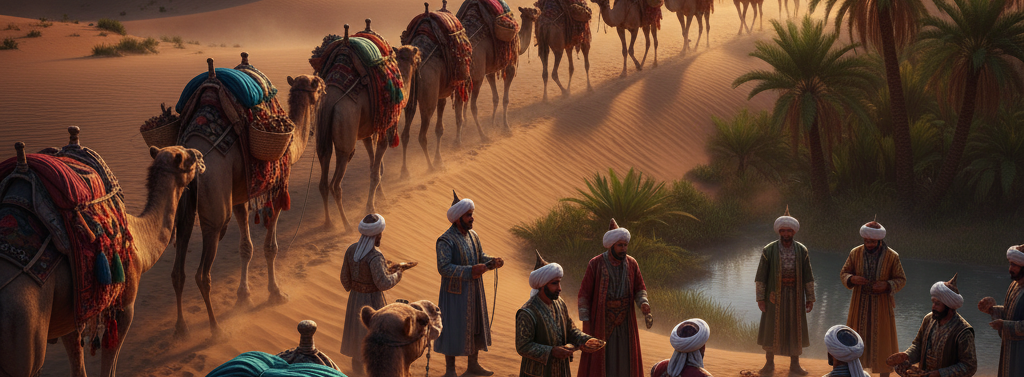
From the Han Dynasty in China to the Roman Empire in Europe, the Silk Road connected civilizations that otherwise might never have interacted. Its influence extended beyond trade, leaving a lasting imprint on culture, religion, science, and the physical landscapes through which it passed.
The Origins and Structure of the Silk Road
The foundations of the Silk Road were laid during the Han Dynasty around the 2nd century BCE, when Chinese emissaries and merchants began traveling westward in search of alliances and markets. What followed was not a fixed route, but a web of interconnected paths stretching over 6,000 kilometers across Central Asia, the Middle East, and parts of Europe.
Geography played a decisive role in shaping these routes. Caravans navigated harsh environments such as the Taklamakan Desert, relying on oasis towns like Dunhuang and Kashgar for survival. Mountain passes, including the Pamirs and the Hindu Kush, acted as gateways between regions, while maritime extensions through the Indian Ocean connected coastal trade centers from East Africa to Southeast Asia.
These routes enabled the movement of luxury goods such as silk, spices, glassware, and precious metals, but they also facilitated the spread of technologies like papermaking and irrigation systems. Trade thrived not because of centralized control, but because local communities adapted the routes to their geographic realities.
Cultural Exchange Beyond Commerce
While economic exchange was central to the Silk Road, its deeper legacy lies in cultural interaction. Religions such as Buddhism, Christianity, and Islam traveled alongside merchants, reshaping belief systems across continents. Buddhist monks carried scriptures from India into China, while Islamic scholars transmitted mathematical and astronomical knowledge westward.
Artistic traditions also evolved through contact. The fusion of Greek and Asian influences in Gandharan sculpture is one of the most visible examples of cultural blending enabled by the Silk Road. Languages, cuisines, and customs were exchanged in marketplaces where traders from vastly different backgrounds met face to face.
However, connectivity came with risks. The same routes that carried ideas also facilitated the spread of diseases. The Black Death, which devastated Eurasia in the 14th century, moved along established trade corridors, revealing the unintended consequences of interregional connection.
Economic Impact and the Rise of Trade Cities
The Silk Road contributed to the rise of influential urban centers that served as commercial and cultural hubs. Cities such as Samarkand, Bukhara, and Constantinople flourished due to their strategic locations along major routes. These cities became centers of learning, craftsmanship, and diplomacy, often thriving for centuries.
Local economies adapted to the flow of goods by developing services such as caravan logistics, currency exchange, and storage infrastructure. In many regions, trade revenues supported architecture, education, and public works, leaving material evidence that still defines these landscapes today.
Rather than creating uniform prosperity, the Silk Road produced uneven development. Some regions accumulated wealth and influence, while others served primarily as transit zones, highlighting early patterns of economic inequality that remain relevant in modern global trade.
Lessons from Decline and Transformation
The decline of the Silk Road was gradual, shaped by political instability, shifting empires, and the rise of maritime trade routes. Conflicts, insecurity, and changing economic priorities reduced overland trade by the late medieval period. Yet the network never fully disappeared; it evolved, adapted, and left traces embedded in regional infrastructure and cultural memory.
Modern initiatives often draw symbolic inspiration from the Silk Road, emphasizing connectivity and cooperation. However, history reminds us that trade networks succeed only when they balance economic ambition with cultural understanding, environmental awareness, and equitable participation.
Environmental degradation, cultural exploitation, and geopolitical tension are not new challenges. They are recurring themes that shaped the original Silk Road and continue to influence global connectivity today.
Preserving the Silk Road’s Legacy
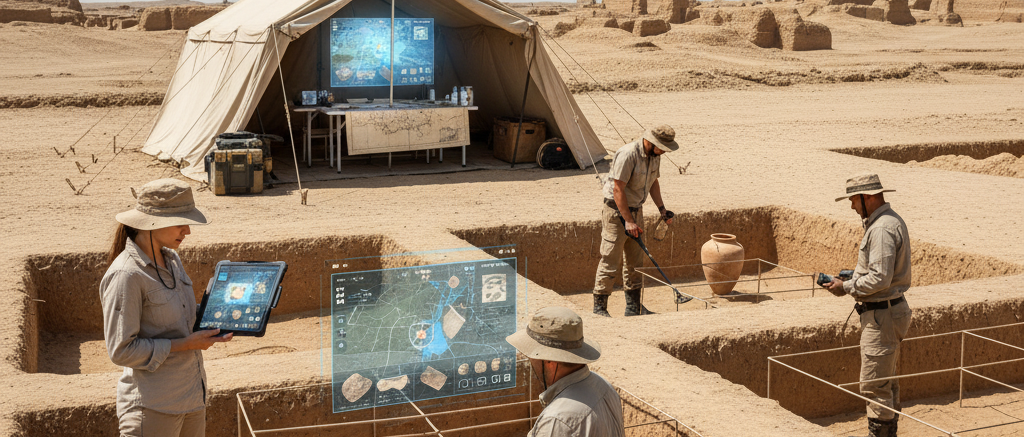
Preserving the Silk Road is not solely the task of historians. Archaeologists, local communities, and international organizations collaborate to protect fragile sites, document artifacts, and promote sustainable tourism. Digital archives and interdisciplinary research help reconstruct lost routes and better understand how geography shaped human interaction.
Educational programs and cultural exchanges inspired by the Silk Road foster a renewed appreciation for shared heritage. By studying this network, we gain insight into how geography connects societies—not just physically, but socially and intellectually.
Conclusion
The Silk Road stands as one of history’s most influential networks, shaping global geography through movement, exchange, and adaptation. Its legacy reminds us that connectivity is never purely economic; it is cultural, environmental, and deeply human.
Understanding the Silk Road allows us to better interpret the modern world—its opportunities, tensions, and responsibilities. By learning from its successes and failures, we can approach today’s interconnected landscape with greater awareness, respect, and balance.