
 By AI
By AI Human history is inseparable from movement. Long before modern borders and transportation systems existed, people migrated across continents in search of food, safety, and opportunity. These migration routes were not random; they were shaped by geography—rivers, coastlines, climate zones, and natural corridors that guided human expansion for tens of thousands of years.
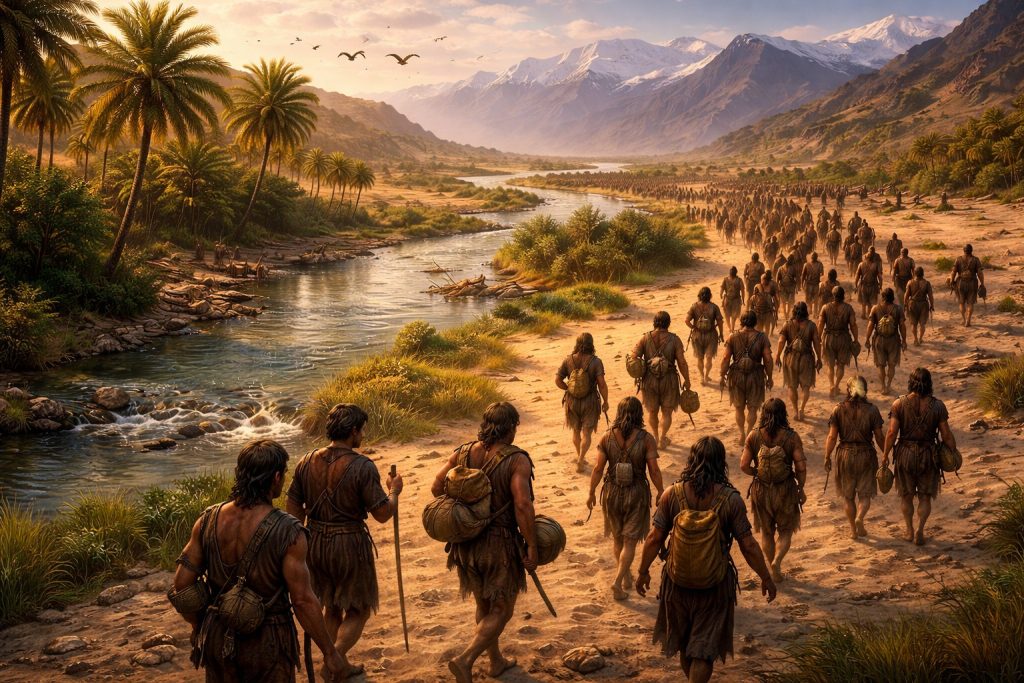
Understanding ancient migration routes allows us to see how geography influenced settlement patterns, cultural development, and the distribution of civilizations across the globe.
Geography as a Guide for Early Migration
The earliest human migrations followed landscapes that offered survival advantages. River valleys such as the Nile, Tigris, and Indus provided water, fertile land, and predictable seasonal cycles. Coastal routes allowed early humans to move gradually while relying on marine resources, a strategy now supported by archaeological evidence from Southeast Asia and Australia.
Mountain ranges and deserts, by contrast, acted as both barriers and filters. While regions like the Sahara limited movement during dry periods, greener phases opened corridors for migration, reshaping population flows across Africa and into the Middle East.
Migration Routes and the Spread of Culture
As people moved, they carried languages, tools, beliefs, and social structures. Migration routes became channels of cultural transmission. Agricultural knowledge spread from the Fertile Crescent into Europe, while metallurgy and animal domestication reshaped societies across Eurasia.
These movements were rarely peaceful or linear. Encounters between migrating groups and established populations led to cooperation, conflict, and cultural blending. Over time, migration routes became foundations for trade paths, political boundaries, and cultural regions that still exist today.
Long-Term Impact on Human Geography
Migration routes influenced where cities emerged, how economies developed, and which regions became centers of power. Coastal settlements evolved into ports, while crossroads turned into strategic hubs. Even modern transportation networks often follow paths first established by ancient migration patterns.
Today, studying migration routes offers insight into contemporary challenges. Climate change, resource scarcity, and political instability continue to drive human movement, echoing patterns from the distant past.
Conclusion
The great migration routes remind us that geography does not merely shape land—it shapes people. By tracing these paths, we gain a deeper understanding of how humanity adapted, connected, and transformed the world long before the modern era.